
Placing the Youth at the Centre of Interreligious Cooperation: Reflections from PROCMURA’s Interfaith Week Engagements in Western Kenya
- By PROCMURA
- Events
- Hits: 433
Across many parts of Africa, young people continue to live at the intersection of diversity and vulnerability. While they represent the most significant potential for peacebuilding and social cohesion, they are often the first targets of manipulation in contexts marked by religious misunderstanding, mistrust and historical grievances. In Western Kenya, a region characterised by religious plurality and strong community identities, the need for intentional, youth-centred interreligious engagement remains both urgent and strategic.
It was against this backdrop that PROCMURA, through its Youth and Interreligious Cooperation Programme, under the banner of Western Kenya Youth Interfaith Network, launched in early 2025, marked this year’s Interfaith Week with two complementary community-based engagements in Bungoma and Mumias, Western Kenya region. The activities were designed not only to celebrate religious and cultural diversity among young people, but also to respond to lived realities by creating practical and safe platforms where youth could actively practise diapraxis, cooperation, and peaceful coexistence in the spirit of building a cohesive and inclusive society.
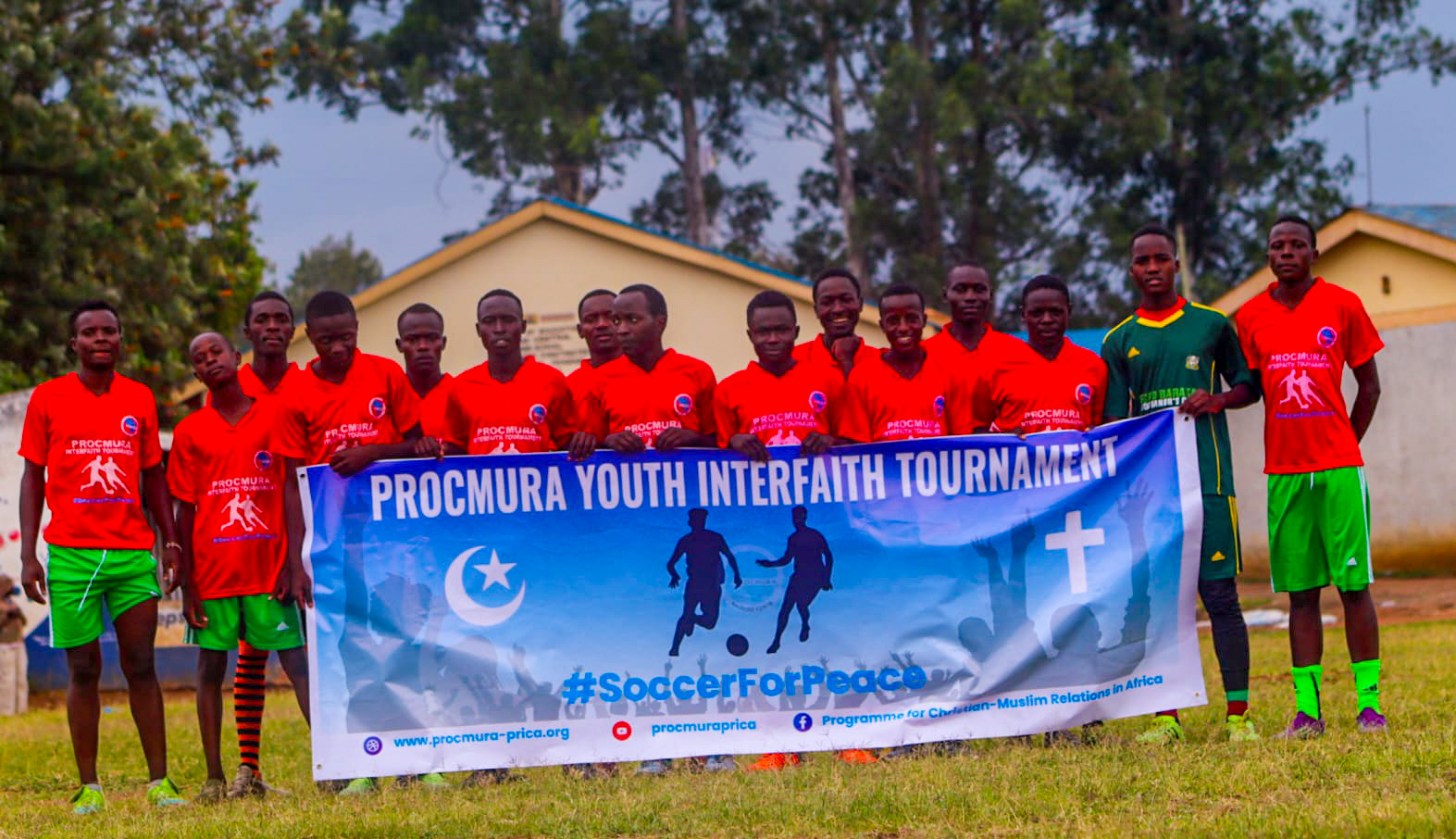
In Kakamega County, one of the western Kenyan areas with large Christian and Muslim populations, PROCMURA adopted an intentional approach, using sport as a tool for interreligious engagement. The all-inclusive football tournament demonstrated how sport can serve as a unifying factor, especially among young people in a region that has experienced its fair share of mistrust and suspicion between the main religious communities. Christian and Muslim youth, alongside members of the wider community, shared the pitch not only as friendly competitors but also as partners in promoting mutual respect and peaceful coexistence.
Away from the spotlight of the matches, the tournament provided a perfect platform for conversations about religious tolerance, peace, understanding, and shared responsibility in building cohesive and inclusive communities. The unity displayed on and off the field undoubtedly reflected the power of sport to break down stereotypes, build friendships, and encourage solidarity among young people.
The tournament offered a neutral and accessible platform, particularly effective in engaging young people who may not readily participate in formal engagement settings. Before the matches began, youth leaders addressed participants and spectators on the importance of peace, mutual respect and peaceful coexistence among religious communities in Western Kenya. These conversations helped frame the tournament not as mere competition, but as a collective exercise in trust-building and social cohesion.
Ali, one of the Leaders in the PROCMURA Western Kenya Youth Network, noted, “The tournament challenged stereotypes, fostered interaction across religious lines and demonstrated how shared activities can break down barriers more effectively than formal engagements alone. For many participants, it was a lived experience of cooperation that reinforced peace messages in a practical and memorable way.”
In the neighbouring Bungoma, the youth engagement was designed as a Cultural and Interreligious Celebration that intentionally placed young people at the centre of advancing interreligious cooperation and peaceful coexistence through shared cultural and religious expression and community participation. The engagement brought together young people, religious and community leaders, and other stakeholders from diverse backgrounds.
Through cultural performances, exhibitions, keynote reflections, and interactive community engagements, participants explored how religious and cultural diversity has historically shaped the region's social fabric. These activities moved beyond symbolic representation, encouraging young people from the area to reflect on shared values, including respect, dignity, and collective responsibility, in building a more cohesive society.
Addressing the young people, Ven. Kodia of the Anglican Church of Mumias noted that in a region where interreligious relations have been strained, such platforms are critical for rebuilding trust, particularly among youth who often inherit divisions they did not create.
A defining moment of the Bungoma celebration was the youth-led awareness-raising walk, which made stopovers at various urban centres to promote religious tolerance. The walk served as a public affirmation of unity among young people across religious divides, drawing attention to the importance of interreligious cooperation in everyday community life. By occupying public space together, young people visibly challenged narratives of division and demonstrated that peaceful coexistence is both possible and necessary for social wellbeing and development.
Importantly, the Bungoma engagement built on earlier PROCMURA Youth Interfaith Workshops in the region, demonstrating the value of sustained engagement with young people as agents of peace and peaceful coexistence at the grassroots.
Together, the Bungoma and Mumias engagements underscored the importance of investing in youth-led, context-responsive approaches to interreligious cooperation among young people. By combining cultural and religious diversity celebrations, public action and sport, PROCMURA created inclusive spaces where young people could move from passive participants to active peace actors within their communities.
The impact of these activities extends beyond the number of participants reached to include the quality of engagement and the relationships strengthened. Youth emerged with a deeper appreciation of religious diversity, greater confidence in speaking about peace within their communities, and a stronger sense of shared responsibility for social cohesion.